Israeli Kids Initiative

Helping vulnerable children across Israel find stability, healing, and a family to call their own.

The YATOM Israeli Kids Initiative supports vulnerable children across Israel. It’s built on the same idea behind everything YATOM does: Jewish values call us to care for the vulnerable and stand up for those in need.

The initiative offers small, meaningful grants to help cover the real costs of fostering and therapy, so families can focus on providing a child with a stable, loving home.

Coats for Kids

Thanks to YATOM supporters, 22 children in a village in Rwanda recently received warm hooded sweatshirts and sturdy sneakers.

For families facing deep financial hardship, these practical gifts offer more than warmth and protection. They remind children and caregivers that they are seen, valued, and surrounded by care.

Featured Stories

Maya’s Story

Maya (pseudonym) entered emergency foster care when she was only one month old. Her biological parents were struggling with significant mental health challenges and substance abuse, and following a serious incident of domestic violence, it became clear that they were unable to provide their baby daughter with the safe and stable environment she needed.

What was initially intended to be a short-term emergency placement became a much longer stay. For nearly two years, Maya remained with her emergency foster family while efforts were made to support her biological mother and determine the best long-term solution for her.

Maya is a bright, affectionate and curious little girl. Yet after spending almost her entire young life with one family, moving to a permanent foster home represented another profound change. Even when a transition is made for a child’s wellbeing, saying goodbye to the people who have become her source of security can be
deeply difficult.

Earlier this year, Maya was welcomed into the home of Rachel and Daniel (pseudonyms), a foster couple living in a small community in central Israel. Rachel works in education and Daniel is a project manager. Together
they are raising children from previous relationships as well as a child they share.

Maya’s arrival came during a particularly challenging period in Israel, when the security situation disrupted schools, childcare frameworks and regular routines. This meant that her new foster family had to build trust and create a sense of stability under circumstances that were anything but ordinary.

The transition has required patience, sensitivity and close professional support. Maya had formed a deep attachment to her emergency foster family, and separating from them was understandably painful. Her new family is learning to recognize her needs, reassure her through moments of uncertainty, and, most importantly, show her day after day that she is safe, loved, and has a place to belong.

With the guidance of Summit Institute’s foster care professionals, Maya and her foster family are gradually building the foundation for something every child deserves: a secure and loving home in which she can grow, develop and simply be a child.

Noa's Story

Five-year-old Noa (pseudonym) is the youngest of four siblings. For much of her early childhood, her family lived with serious instability. Both biological parents struggled with significant emotional and mental health challenges, and periods of domestic conflict were accompanied by neglect and a lack of consistent adult supervision.

Following a serious family crisis, the children were removed from their home. Noa was placed in an emergency residential setting, while her older siblings were placed in other out-of-home care arrangements.

For a young child, such experiences can profoundly affect the ability to trust adults. Noa had already experienced instability, separation and uncertainty when, in September 2026, another major transition took
place: she moved into the home of her new foster family.

Tamar and Amir (pseudonyms), who live with their four children in a community in central Israel, opened their home to Noa. Tamar works in healthcare and Amir is self employed. From the beginning, they understood that welcoming Noa would mean much more than providing her with a bedroom, meals and daily care. They would need to patiently help her discover that adults can be dependable and that a home can be a safe place.

Their first meeting demonstrated just how difficult that journey might be. Noa was frightened and overwhelmed. She cried, shouted and strongly resisted the family’s attempts to approach her. On the day of the transition, with careful preparation and the close support of the professional team, she eventually agreed to leave with her foster family and travel to her new home.

Since then, the family has responded to her fear with remarkable patience and consistency. They understand that some of Noa’s behaviours are not simply acts of defiance, but expressions of a young child who has experienced trauma and is still learning whom she can trust.

Noa has already begun forming a particularly strong attachment to her foster mother and frequently seeks her closeness and reassurance. Building trust with male figures is taking longer, and the family is respecting her pace while gently helping her feel increasingly secure.

There are still challenging moments. At times, when Noa feels frightened or overwhelmed, she interprets situations around her as threatening even when no danger is present. Her foster family and Summit’s professional team are helping her distinguish between past fears and her present reality, while consistently reinforcing one essential message: here, she is safe.

Noa is only at the beginning of her journey. Progress is measured in small but meaningful moments — a calmer evening, accepting comfort, joining a family activity, allowing someone new to come closer, or simply relaxing enough to play.

Her foster family continues to tell her, again and again: “This is your home. We are here for you.”

For a child who has lived with so much uncertainty, those simple words — repeated through consistent actions every day — can be the beginning of an entirely different future.

Abraham's Story

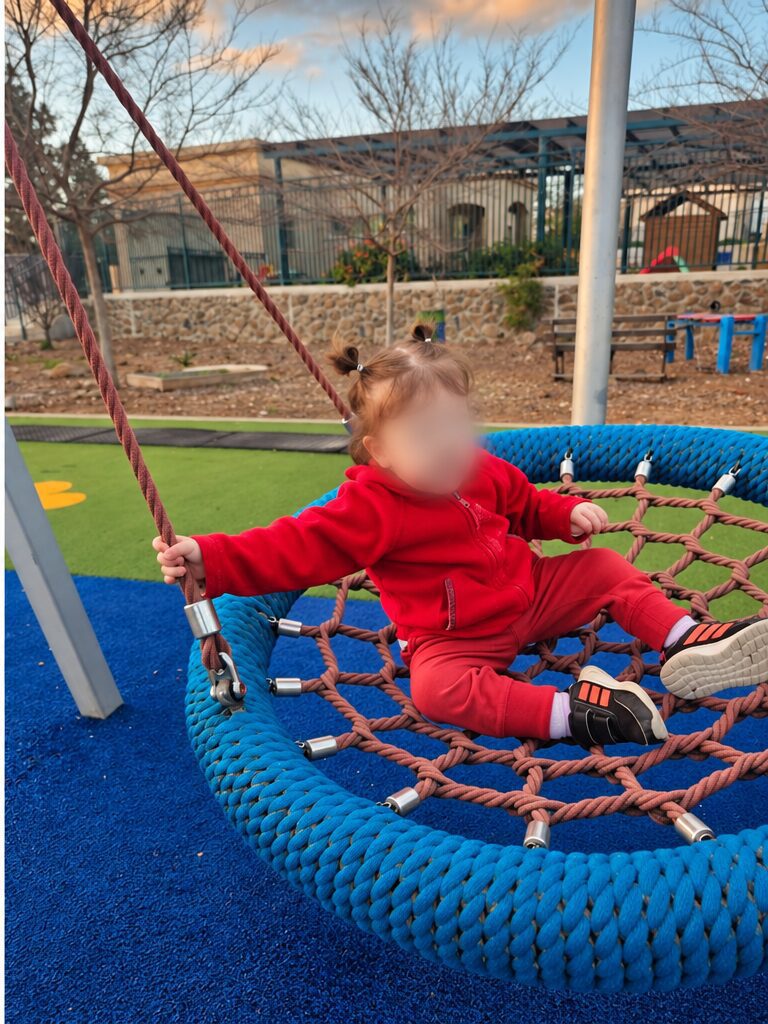
Abraham arrived at an emergency foster home in the middle of the night, just over a year old. He was a bright, charming toddler, but he was facing real developmental delays and rough nights.

With warmth, consistency, and the right professional support, that started to change. Within months, Abraham was walking with support, saying his first words, and forming real bonds with the people caring for him.

Eight months later, he’s getting ready to move in with a permanent foster family. It’s a bittersweet goodbye, but one full of hope for what’s ahead.

Lian, Nehorai, and Idan's Story

Lian (5), Nehorai (3), and Idan (2) — names changed to protect their privacy — were removed from their parents’ home about a year and a half ago. After efforts to stabilize the family didn’t work out, the children moved into foster care.

Lian and Nehorai were placed together in emergency care, where a speech therapist working with Lian felt called to do more. She and her family went through the foster approval process and welcomed both siblings into their home. Supported by their foster parents and six other foster siblings, the two have made real progress. Lian has since started trauma-informed therapy to keep building on that.

Idan, the youngest, was placed with a different foster family at just one year old. Professionals describe it as a seamless match, and he’s thriving alongside his new foster siblings.

The two foster families stay closely connected, so the siblings keep their bond through regular visits. They also support supervised visits with the children’s biological parents, who’ve begun their own path toward rehabilitation, because keeping those relationships alive matters for the children’s long-term wellbeing too.

Alex's Story

Alex was removed from his mother’s home at age five. After a first foster placement didn’t work out, he moved in with a foster family in Be’er Sheva, where he slowly built a life rooted in belonging.

As a teenager, tension grew between Alex and his foster mother — she cared deeply, but struggled to balance protecting him with his need for independence. Like a lot of families, they had ups and downs. But Alex always knew he was their son in every way that mattered.

Just months before his foster placement was set to end, his foster mother found out he was using drugs. It shook the family. His foster father was ready to give up. His foster mother wasn’t. She advocated for Alex, brought in professional support, and helped rebuild trust.

Today, Alex still lives in that home. He’s about to finish his combat service in the Paratroopers Brigade, supported by the family that never stopped choosing him.

More Children We've Supported

Through microgrants and ongoing support, YATOM has also stood alongside:

Help a Child Thrive

Small grants can make an immediate difference, helping children access therapy, stability, and a family who chooses them.

Apply for a YATOM Microgrant

Are you a foster or adoptive family navigating unexpected expenses? YATOM microgrants provide timely assistance so families can focus on creating safe, loving homes.

Help a Child Thrive

Small grants can make an immediate difference—helping children access school, clothing, and the basic support every child deserves.

Apply for a YATOM Microgrant

Are you a foster or adoptive family navigating unexpected expenses? YATOM microgrants provide timely assistance so families can focus on creating safe, loving homes.